
You have invested money and time into creating an online store, launched advertising, and are receiving your first orders. Now imagine that one day your website gets hacked, customer data is stolen, and instead of the homepage, there is a hacker’s placeholder. This is not a movie scenario but a real risk for any online business.
Online store security is not an option but a fundamental necessity, like a lock on the door of your warehouse. In this article, we will explain in simple terms the main threats and provide a step-by-step plan on how to ensure reliable website and customer data protection.

What is an SSL certificate and why it is mandatory
The first and most important step toward security is installing an SSL certificate.
What is it? It is a technology that creates an encrypted connection between your website and the client’s browser. You can easily recognize it by the padlock and the https:// prefix in the address bar.
Why your business needs it:
- Protection of personal data. SSL encrypts all information entered by the client on your website: from passwords to credit card numbers. Without it, this data can be intercepted by attackers.
- Customer trust. Modern browsers (Chrome, Firefox) mark websites without SSL as unsafe. Such warnings can deter up to 80% of potential buyers.
- Payment system requirement. Most online payment services, such as LiqPay or Fondy, will not allow you to accept payments on a site without a valid SSL certificate.
- SEO improvement. Google has officially stated that having SSL is a ranking factor. Sites on https:// have an advantage in search results.
Protection against hacks and viruses: three simple rules
Even the most reliable site can fall victim to an attack if basic digital hygiene rules are ignored. Website protection is not a one-time action but a continuous process.
Regular updates
Most hacks occur due to outdated CMS versions (WordPress, OpenCart) and plugins. Developers constantly find and fix vulnerabilities by releasing updates. Ignoring them is like leaving your store doors open overnight.
Strong passwords
Simple but true: a weak admin password (admin, 123456) is a direct invitation for hackers. Use complex, unique passwords consisting of letters, numbers, and symbols.
Two-factor authentication (2FA)
This adds an extra layer of account protection. Even if a hacker steals your password, they cannot access the admin panel without the second factor—a unique code from your phone. Two-factor authentication is a security standard we recommend to all our clients.
Online payment security: how to protect transactions
Accepting payments on your website carries the highest responsibility. Any leakage of financial data can lead to catastrophic reputational and financial losses. 
Why it is important to use trusted payment gateways?
Never try to process or store credit card data on your own website. This is extremely risky. Always use trusted payment systems (LiqPay, Fondy, WayForPay, Stripe).
Here’s how they ensure online payment security:
PCI DSS standard — all reliable payment gateways are certified according to the Payment Card Industry Data Security Standard. This guarantees that their infrastructure is securely protected.
Tokenization — your client’s card data is not stored on your site. Instead, a unique encrypted token is used, making it impossible to steal real data.
Anti-fraud systems — powerful algorithms analyze each transaction in real time to detect and block fraudulent activity.
Your task is to choose a reliable gateway, and ours is to integrate it correctly and securely.
Customer personal data protection
When a customer leaves their name, phone number, and address on your site, they trust you. Data leaks can lead not only to reputational damage but also legal liability. Therefore, personal data protection is not just good practice but a legal requirement. 
Main principles to follow:
Privacy policy — your site should have a dedicated page clearly explaining what data you collect, how you use it, and how you protect it.
Consent for processing — under each form (registration, order), there must be a checkbox: “I agree to the Privacy Policy.” Without this consent, data cannot be collected.
Data minimization — ask clients only for the information necessary to fulfill the order. Do not collect extra data “just in case.”
Following these rules not only protects you legally but also increases customer trust in your online store.
Backups: your insurance in case of problems
Even with the best protection, unforeseen situations occur: server failure, failed update, human error, or even a DDoS attack. That is why backups exist.
What is a backup?
It is a complete copy of your website (files and database) stored in a secure location. If something happens to your main site, you can quickly restore it from this copy.
Key rules for effective backups:
- Backups should be created automatically and regularly; for an online store, this means daily.
- Copies must be stored separately from the site, e.g., in cloud storage (Google Drive, Dropbox). This ensures that if the server is attacked, your backups remain safe.
- Occasionally check that backups are being created correctly and that the site can be restored from them.
Having an up-to-date backup gives you peace of mind and guarantees that any technical disaster will not be fatal for your business.
How Kliox ensures your security
We believe that online store security is a fundamental part of quality development, not an extra option. We lay the foundation for reliable website protection at every stage of our work. 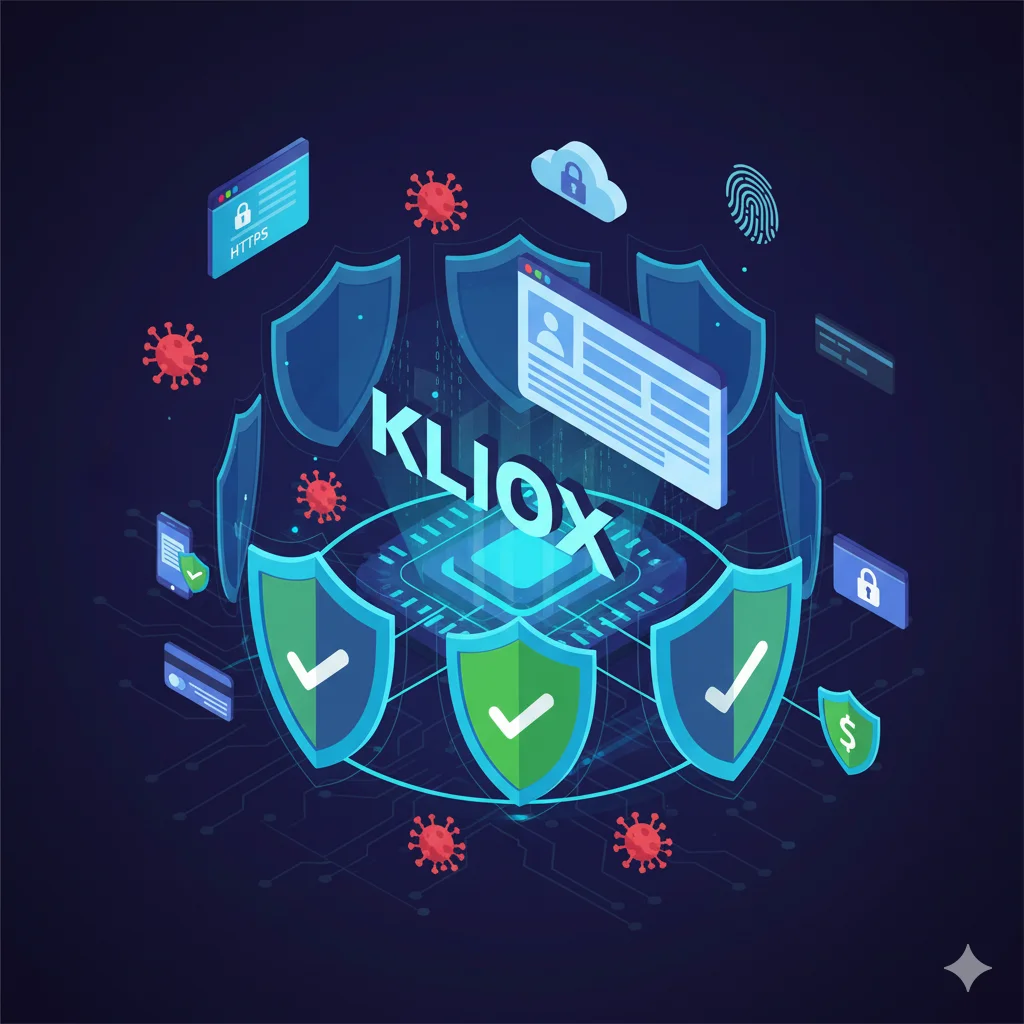
Our security standard includes:
- Mandatory SSL certificate installation on all our projects.
- Setting up basic protection against common attacks and spam at the development stage.
- Recommendations and configuration of strong passwords and two-factor authentication for the admin panel.
- Integration only with verified payment systems that comply with PCI DSS standards.
- Automatic backup setup on a reliable hosting service.
For clients who need the highest level of protection, we offer a comprehensive Technical Support service, including proactive monitoring, regular updates, and continuous security control.
Conclusion: invest in your peace of mind and customer trust
Thus, online store security is not a one-time setup but a continuous process. From having an SSL certificate to regular backups— each of these elements is an essential part of reliable website protection.
Ignoring security today can lead to huge financial and reputational losses tomorrow. Investing in the protection of your online business is a direct investment in its stability, customer trust, and your personal peace of mind.
Not sure about your website’s security?
Let’s check it. We are ready to conduct a free express security audit of your current online store.
We will analyze key parameters and provide you with a checklist with recommendations to improve protection.