
Acquiring a new customer costs 5 times more than retaining an existing one. A loyalty program solves this.
// Bonus points for purchases, customer tiers with privileges, a referral system, and personalized offers — a system that builds the habit of buying from you

Why Customers Don't Return After Their First Purchase
Every purchase feels like the first: the customer has no reason to return to you specifically
If a competitor offers the same price and quality, the customer chooses whoever appears first on Google or has more convenient advertising. Without a loyalty program, you have no advantage over a competitor for an existing customer.
Advertising budgets grow, but profits don't
CAC (customer acquisition cost) rises every year due to advertising competition. If each customer buys only once, the store keeps paying to acquire customers instead of building a base of loyal buyers who return without advertising spend.
No incentive to recommend the store to friends
A satisfied customer may recommend the store, but without a referral program this happens rarely and without structure. A referral system turns "I could recommend it" into "I want to recommend it because I'll get a bonus."
"Discounts for everyone" don't build loyalty and reduce margins
Constant promotions for everyone teach customers to wait for a discount instead of buying at full price. A personalized system of bonuses and tiers builds loyalty without undermining the brand's price perception.
What Problems a Custom Loyalty Program Solves
A system that gives the customer real value from every purchase and builds the habit of returning to you

// Loyalty Program: The Math of Repeat Sales
According to research by Bain & Company, increasing customer retention by 5% increases profits by 25–95%. A loyal customer buys more often, in larger amounts, and with lower marketing costs — they already know the store and trust it. A loyalty program is a systematic mechanism that turns one-time buyers into regular customers through real financial incentives and emotional connection with the brand.
What an Effective Loyalty Program Consists Of
Three key components: value (the customer gets a tangible benefit from points), simplicity (earning and redeeming without unnecessary steps), and visibility (the customer always sees their balance and how much remains to the next tier). Without any of these three components, a loyalty program doesn’t work — customers sign up and forget about it.
Tier System as a Retention Tool
Tiers (Bronze → Silver → Gold → VIP) add a gamified element: the customer wants to “reach” the next tier and its privileges. A progress bar toward the next tier in the personal account is one of the most effective elements that encourages an additional purchase. It works especially well when 1–2 purchases remain until the next tier: “One more — and I’m Gold with free delivery forever.”
Comparison of Acquisition and Retention Channels:
| Channel | Order Cost | Conversion | Repeat Rate |
| Google Ads | High (CAC) | 2–4% | One-time |
| Email to regular customers | Minimal | 8–15% | High |
| Loyalty program | Minimal | 20–35% returns | Systematic |
| Referral program | Minimal | New + regular customer | Double value |
Referral Program — The Cheapest Acquisition Channel
A customer who came on a friend’s recommendation converts 4 times better than cold traffic from ads and is retained 2 times better. A referral program where both sides receive a bonus is one of the most effective channels for attracting quality customers. The mechanics are simple: the customer shares a personal link, the new customer makes a purchase, and both receive points.
Who a Loyalty Program Suits
- Stores with repeat purchases — cosmetics, food, pet supplies, stationery, clothing
- Fashion and lifestyle brands — where emotional connection with the brand matters more than price
- Stores with a base of 500+ customers — where there is an audience for reactivation
- Stores spending a significant advertising budget — where reducing CAC is critically important
We study customer behavior: average check, purchase frequency, average LTV. We design points mechanics, tiers, and privileges that will be truly valuable to your audience rather than formal.
We define the percentage of points from the purchase amount, usage rules (minimum amount, maximum % payable with points), points validity period, and rules for tier upgrades and downgrades.
We implement the logic for earning and redeeming points, the tier system, and the progress bar. We develop the "My Bonuses" section in the personal account with balance, tier, and transaction history.
We implement the referral link and the mechanism for awarding points to both participants. We add points for reviews, subscriptions, and social activities to quickly build an initial balance.
We set up trigger notifications: points earned after a purchase, reminders about expiring points, new tier reached, personal offer for birthday.
We launch with a welcome bonus for new participants and a reactivation campaign for existing customers. After 3 months we analyze engagement and adjust the mechanics for better results.

Situation
An organic cosmetics store with a base of 8,400 customers and an average check of 950 UAH. Analysis showed a worrying picture: 74% of customers bought only once and never returned. Average customer LTV was 950 UAH (one purchase). Meanwhile, the cost of acquiring a new customer through advertising rose by 40% over the year to 380 UAH. The marketing budget was eating a significant part of the margin. The owner understood that they needed to stop chasing “new” customers and start retaining those who had already bought.
Solution
We developed a loyalty program with three tiers: Naturalist (0–3,000 UAH in purchases — 3% points), Expert (3,000–10,000 UAH — 5% points + free delivery from 800 UAH), Ambassador (over 10,000 UAH — 7% points + access to new collections a week before the official release). Referral program: 200 points for each friend who made a first purchase. Points for a review with a photo — 50 points. Automatic email after 60 days of inactivity with a reminder about points that are “waiting”.
Result
After 12 months of the program: average number of purchases per active program participant — 3.4 (versus 1.4 for customers outside the program). Average LTV of a program participant — 2,185 UAH versus 950 UAH in the base group — a 2.3-fold increase. The share of repeat purchases grew from 26% to 51% of total revenue. 1,240 new customers were attracted through referrals with a 38% conversion rate versus 11% for regular advertising. The marketing budget was reduced by 25% without losing sales volume.
RELATED SERVICES
It depends on your business margin. For most stores, 2–5% of the purchase amount is optimal. It's important that the bonus is noticeable but does not exceed the margin. We will help calculate the optimal percentage based on your unit economics.
With the right mechanics — no. Limitations: minimum purchase amount for earning points, maximum percentage payable with points (usually 20–30% of the amount), points validity period (6–12 months). These parameters rule out unprofitable schemes.
A welcome bonus for existing customers upon first registration in the program is the most effective way. We award bonus points for past purchases over the last 6–12 months — this immediately attracts customers who have already bought and shows them the value of the program right away.
Partially. For niches with infrequent purchases, the focus is on the referral program (the customer recommends and receives a bonus) and points for activities (review, survey). Purchase bonuses are less effective but still useful for word of mouth.
Yes — preferably. A customer who sees their balance and progress to the next tier becomes a much more active program participant. You can implement a minimal account showing only balance and tier, or a full personal account with orders and documents.
Basic program (points + tiers + personal account) — 4–5 weeks. With referral program and email automation — 6–8 weeks. With a full personal account and CRM integration — 8–12 weeks.
Imagine that your online store is already growing. Orders are coming in steadily and in large volumes, and you can no longer manage inventory storage, pack each parcel, and run to the post office yourself. Managers spend hours on logistics instead of sales. If you constantly think, “Where can I get more warehouse space?”, it’s […]
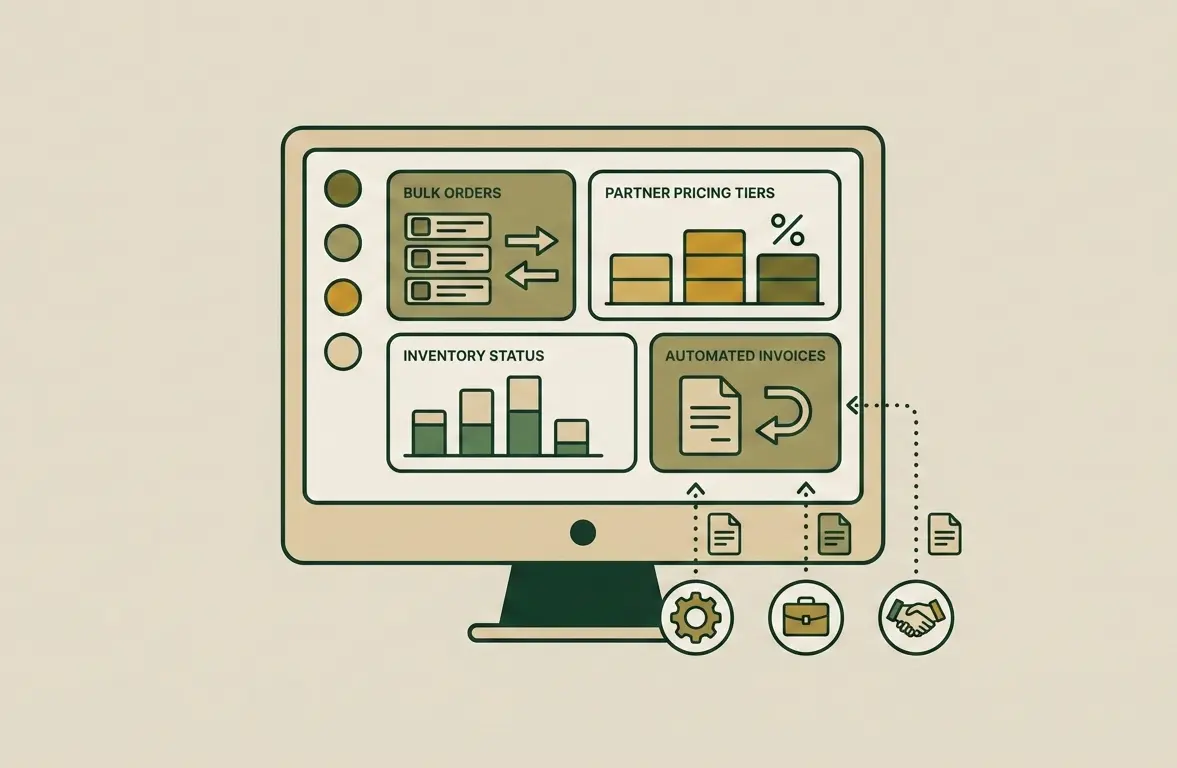
B2B e-commerce is the stage of a company’s maturity when direct business-to-business sales exceed retail in volume. If you still manage wholesale clients through email, Excel spreadsheets, and phone calls, you are not controlling your business potential. Instead, you depend on the human factor. Creating a B2B portal is not an expense for a new […]
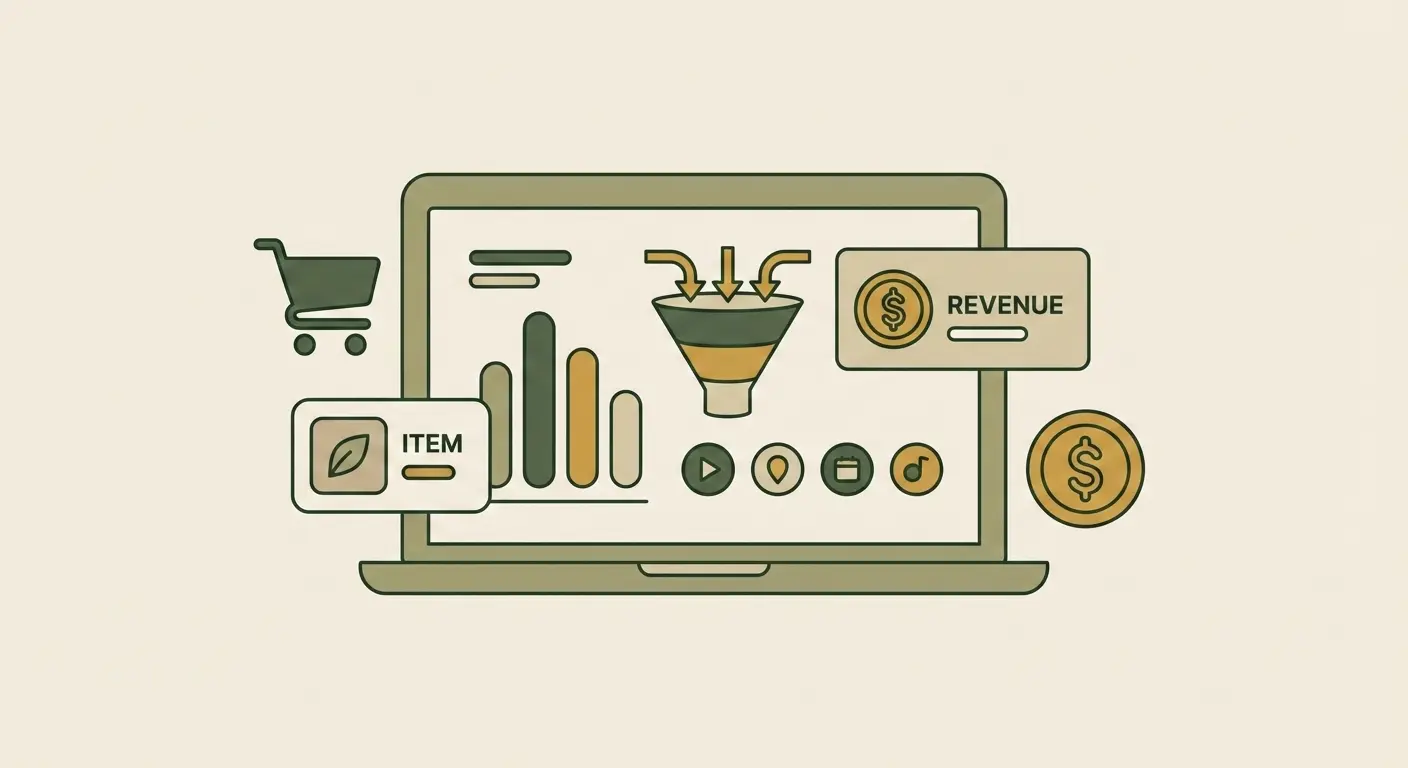
If you don’t measure, you don’t manage. An online store owner who makes decisions based on intuition is like a driver with their eyes blindfolded. Today, Google Analytics 4 (GA4) is not just a trendy tool — it is a critically important instrument for the survival and growth of your business. We will show how […]
Loyalty Program for Online Store: How to Increase Customer LTV and Reduce Dependence on Advertising
Acquiring a new customer costs 5–7 times more than retaining an existing one. At the same time, a regular customer buys on average 2–3 times more often than a new one and with a higher average check. The custom loyalty program from Kliox is a systematic mechanism that turns one-time buyers into regular customers and builds a sales channel with minimal marketing costs. Combine it with repeat sales automation and a personal account for maximum retention effect. Book a consultation — we will analyze your store’s current repeat purchase rate.