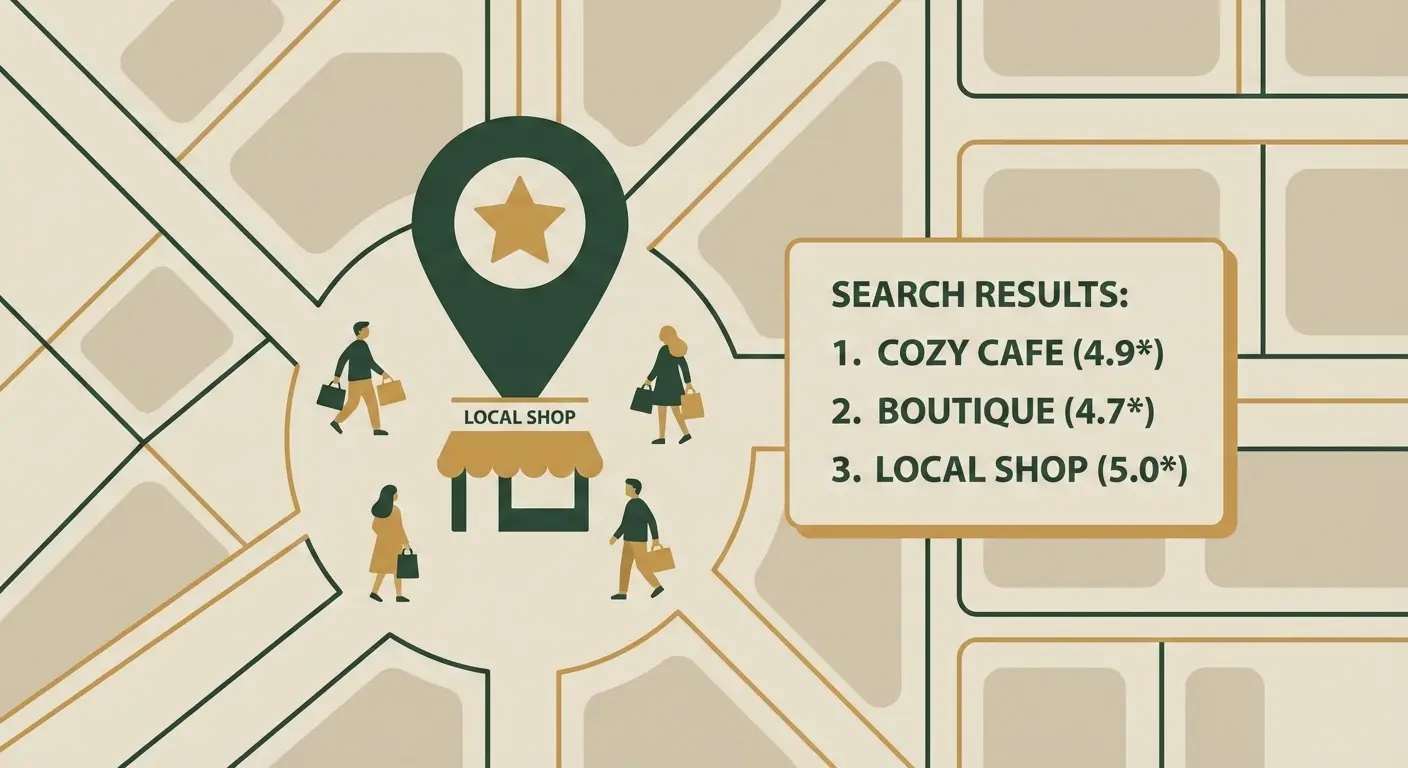

Paid advertising is like renting a billboard on a highway. As long as you pay, you are visible. Once you stop paying, the flow of customers stops.
Content marketing is a completely different strategy. It’s like building your own exit from that highway straight to your online store. It takes longer and is more complex, but that exit is yours forever, and it brings a stable, free flow of customers for years.
A blog for an online store is not just articles for show. It is a powerful SEO asset that works for customer acquisition 24/7. In this guide, we will break down step by step how to write blog articles that Google loves and that readers enjoy reading—and that turn them into your customers.
Step 1: Finding topics — stop guessing, start solving problems
The biggest mistake is writing about what interests you. You need to write about what hurts your customers. Your blog should become their main advisor in your niche. All blog topics can be divided into three major groups. 
1. Pain-point content (attracting new users)
These are articles that answer informational queries like How to…?, Which is better…?, How to choose…?. People are not yet ready to buy; they are in the information-gathering stage. Your task is to give them the best possible answer and introduce them to your brand.
Example: For a coffee store — How to properly brew coffee in a moka pot?
Where to look for ideas? Enter your main keywords into Google and look at the “People also ask” block. Analyze comments under your social media posts and the questions customers ask your managers.
2. Product content (warming up warm leads)
These are articles that help a customer make the final purchase decision. They target people who are already choosing a specific product.
Example: iPhone 15 Pro vs Samsung S24: which camera is better for Instagram photos?
Formats: Detailed product reviews, comparisons of several models, roundups (TOP 5 moisturizing creams for summer), usage guides.
3. Brand content (increasing loyalty)
These are articles that tell the story of your business, show behind the scenes, and communicate your values.
Example: How we create our linen dresses: from sketch to final stitch.
Why does this work? People buy from people. Such expert content builds an emotional connection and turns ordinary customers into true brand ambassadors.
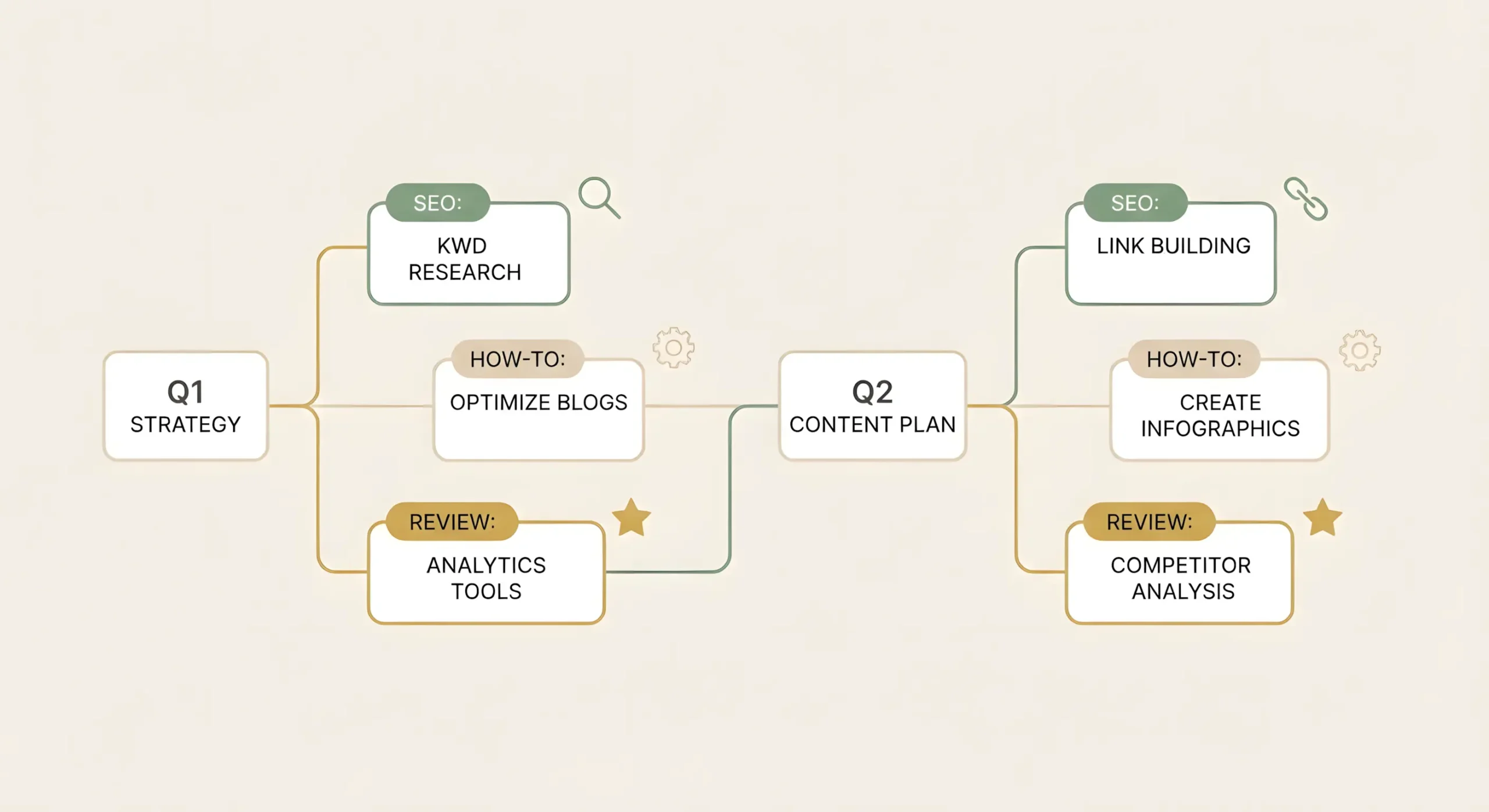
A well-designed content plan should harmoniously combine all three types of content to work at every stage of the sales funnel.
Step 2: Writing an SEO-optimized article — the skeleton of your success
Finding an idea is only 20% of the work. For Google to notice your article, it must be properly structured and optimized.
Keywords
The main keyword should appear in the main heading (H1), the first paragraph, one of the subheadings (H2), and in the conclusion. Additional (LSI) keywords should be evenly distributed throughout the text.
Headings (H1, H2, H3)
Use a clear hierarchy. H1 — only one per page. H2 — раскрывают main sections. H3 — detail subpoints. This helps both bots and people easily scan the text.
Structure: Short paragraphs (3–5 lines)
Bulleted and numbered lists. Highlighting key points in bold. No one reads walls of text.
Meta tags
Be sure to write unique Title and Description tags for each article. These are what users see in Google search results, and they directly influence whether someone clicks your link.
Step 3: Content packaging — how to get people interested in reading your texts
Even a perfectly optimized SEO article is useless if it’s impossible to read. In the modern world, we don’t read text—we scan it. Your task is to package copywriting so that the key ideas are clear within 10–15 seconds.
1. Create a hook in the first paragraph
The introduction is the most important part. You have 3 seconds to convince the reader to stay. Hit their pain point immediately and promise a concrete solution. Forget long lyrical introductions.
2. Turn features into stories (Storytelling)
People don’t buy products; they buy results or emotions. Instead of dryly listing features, weave them into short stories or usage scenarios.
Bad (dry facts): Our backpack has a 30-liter capacity and waterproof Cordura 1000D fabric.
Good (story): Imagine this: you’re in the Carpathians, and it suddenly starts raining. But your laptop and dry clothes are completely safe, because our backpack is made from the same waterproof Cordura 1000D fabric used in military gear. And the 30-liter capacity is just right for everything you need for a mountain weekend.
Why does this work? Stories create an emotional connection and help the customer imagine the product as their own. This approach turns your copywriting from a simple description into a powerful sales tool.
3. Add relevant images and videos
Text without images in 2026 is nonsense. Break up your article with high-quality photos, infographics, screenshots, or short videos. This not only makes the text less monotonous, but also significantly improves comprehension and behavioral SEO factors.
Proper packaging turns your SEO article from a boring wall of text into engaging, easy-to-digest content that people read to the end—and are therefore more likely to click through to your product links.
Step 4: How to turn a reader into a buyer — traffic monetization
Attracting a reader is only half the job. Now you need to gently turn them into a buyer.
Native product links
Weave links to relevant products directly into the article text.
Example: In the article How to care for leather shoes? you write: …for this, this particular product works best. And the link leads to that product’s page.
Curated blocks “Editor’s Choice”
Inside or at the end of the article, you can add a visual block with 2–3 products you recommend related to the article topic.
Calls to action (CTA)
Every article should end with a logical call to action. This doesn’t have to be just “buy”; it can also be to browse the catalog, get a consultation, subscribe to a newsletter, etc.
Advanced technique: Content Upgrade
Offer the reader something extra valuable in exchange for their email.
Example: At the end of an article about choosing coffee, offer: Want to get our exclusive PDF guide “10 Secrets of the Perfect Espresso”? Leave your email, and we’ll send it within 3 minutes. This helps build a database of warm leads for future email campaigns.
Step 5: Content distribution — help your article find its reader
Writing and publishing a text is not enough. To make it start working faster, you need to help it. This promotion process is called content distribution.
Main channels:
- Social media — announce the article on your Instagram, Facebook, Telegram. Don’t just drop a link; write a short, intriguing teaser.
- Email newsletter — send your new article to your existing customer base. This is a great way to remind people about yourself and provide value.
- Collaboration with bloggers — arrange with small bloggers in your niche to review your article or link to it.
How we build content strategies at Kliox
Creating a successful blog is not chaotic article writing, but systematic work based on a clear strategy. At Kliox, we approach content marketing the same way we approach website development—engineering-driven.
Our process starts with an in-depth analysis of your niche, competitors, and target audience. We build a detailed semantic core and based on it develop a long-term content plan.
Each blog topic in this plan has a clear goal: attract a specific audience, address their pain point, and lead them to the next step in the sales funnel.
We handle the entire cycle: from idea research and writing SEO articles to publishing, distribution, and performance analysis. Our goal is to turn your blog into a predictable and scalable customer acquisition channel that works for your business for years, reducing dependence on paid advertising.
Conclusions: content is your tireless salesperson
Proper content marketing is an investment that only grows in value over time. Every SEO article published today is your digital asset that will bring you targeted customers for free in a month, and in a year. It’s your virtual expert consultant working 24/7, building trust in your brand.
Ready to turn your blog into a customer acquisition machine?
Let’s develop a personalized content plan for the next 3 months.
Order a free consultation, and our marketer will analyze your niche, find high-revenue blog topics, and propose a strategy that will help you start getting free traffic and new orders.