Imagine that your online store is already growing. Orders are coming in steadily and in large volumes, and you can no longer manage inventory storage, pack each parcel, and run to the post office yourself.
Managers spend hours on logistics instead of sales. If you constantly think, “Where can I get more warehouse space?”, it’s time to seriously understand what fulfillment is and whether this investment makes sense for your business.
Fulfillment for online stores is outsourcing all operational work with goods: inventory storage, packing, and delivery to the end customer.
This allows you to focus on marketing, procurement, and brand development. In this article, we pragmatically examine the pros, cons, and alternatives so that you make an informed decision rather than blindly following the trend.
Pros of outsourcing: when logistics becomes your advantage
Outsourcing warehouse operations to a third-party company makes sense when there is a need to free up internal resources, namely:
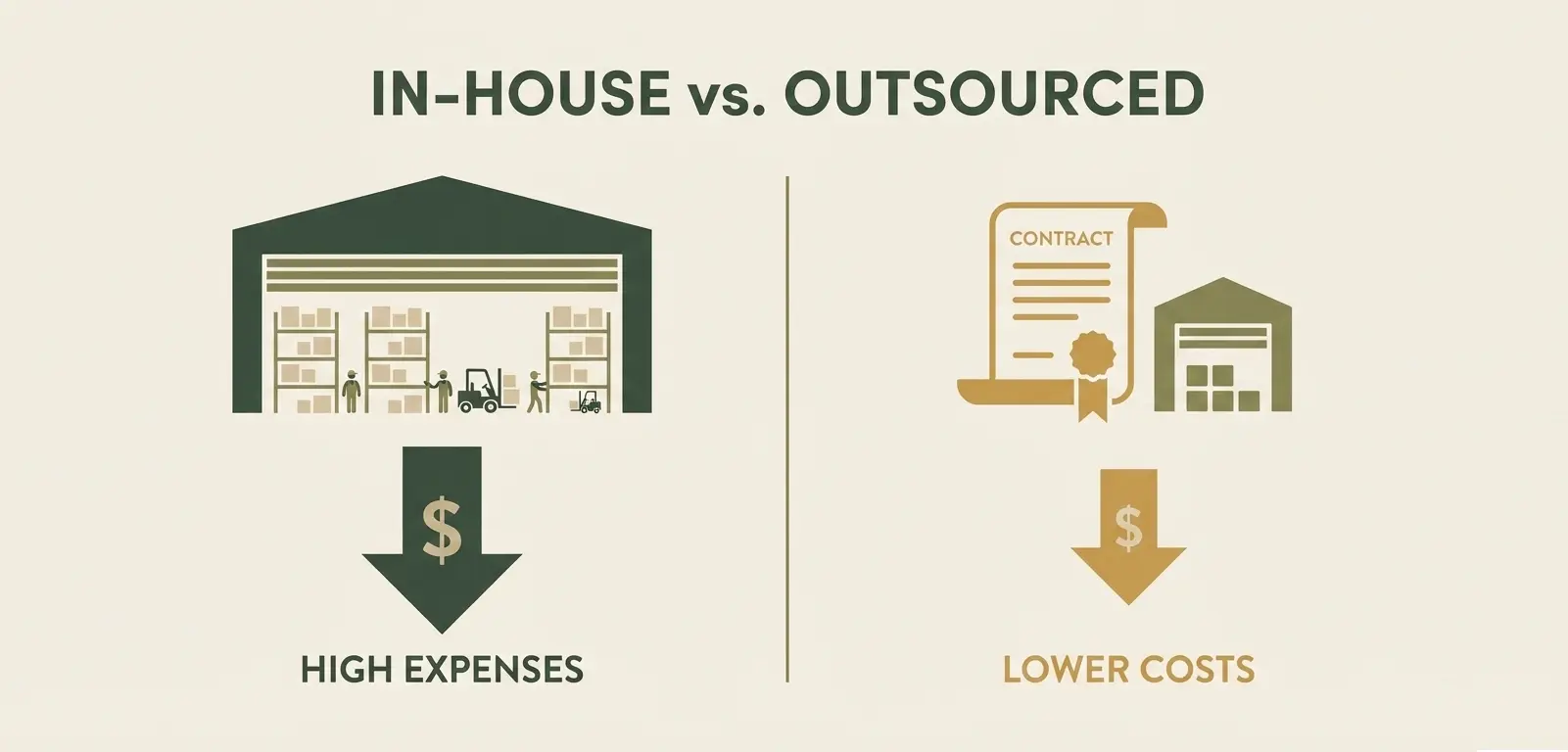
Savings on infrastructure and personnel — you don’t need to rent an expensive warehouse, hire packers, buy shelving, or deal with POS/logistics issues. This is direct savings on fixed costs.
Professional packing and service — fulfillment operators handle volume, allowing them to buy packing materials cheaper and pack products professionally. This enhances your brand perception.
Pain-free scaling — when you experience a surge in orders (for example, after a successful ad campaign), you simply increase the order volume for the fulfillment operator. You don’t need to urgently find a new warehouse or hire new staff.
Cons and risks: why you should weigh all the ‘for’ and ‘against’
Warehouse outsourcing is not a panacea. There are three key risks to consider before handing over your inventory storage.
- Direct service costs. Unlike your own expenses, which you control, fulfillment is a variable cost. If you have low sales volume, service costs may exceed maintaining a small in-house warehouse.
- Loss of direct control. You stop seeing your products daily. It’s critical that your delivery module and communication with the operator are flawless. Any mistake by the partner affects your reputation.
- Complexity with returns and non-standard operations. If your product requires special service (e.g., gift wrapping, specific packaging), you need to ensure that the fulfillment operator can perform it properly.
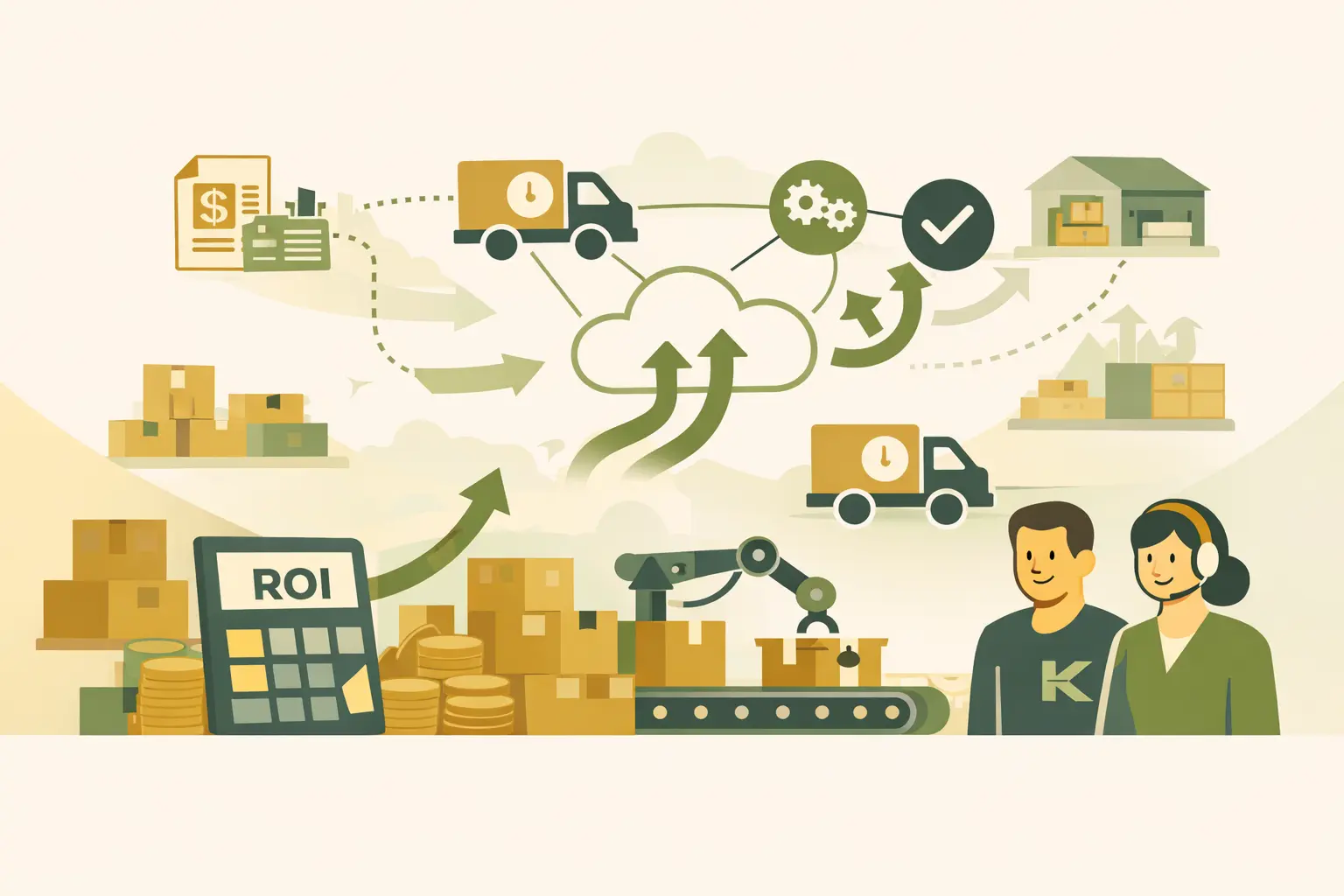
Analysis: when logistics outsourcing is an ROI-positive decision
Fulfillment is justified when:
- You consistently have over 15–20 orders per day.
- You plan aggressive scaling and understand that your current logistics cannot handle the load.
- Your time as an owner is more valuable than the cost of the fulfillment service.
- You don’t want to invest time and money in your own warehouse management and personnel.
Alternatives: when it’s better to keep logistics in-house
Outsourcing is not always the best path. If you are a “re-starter” or work with very specific products, there are alternatives.
Small in-house warehouse — ideal for small volumes or products requiring manual quality control. You retain full control but spend time.
Dropshipping — you don’t purchase inventory for your warehouse but sell the supplier’s products, which are shipped directly to the customer. This means zero cost for inventory storage, but you lose control over packing and delivery speed.
Our expertise lies in reliable integration. We don’t ask you to choose an operator — we integrate your website with any solution you select.
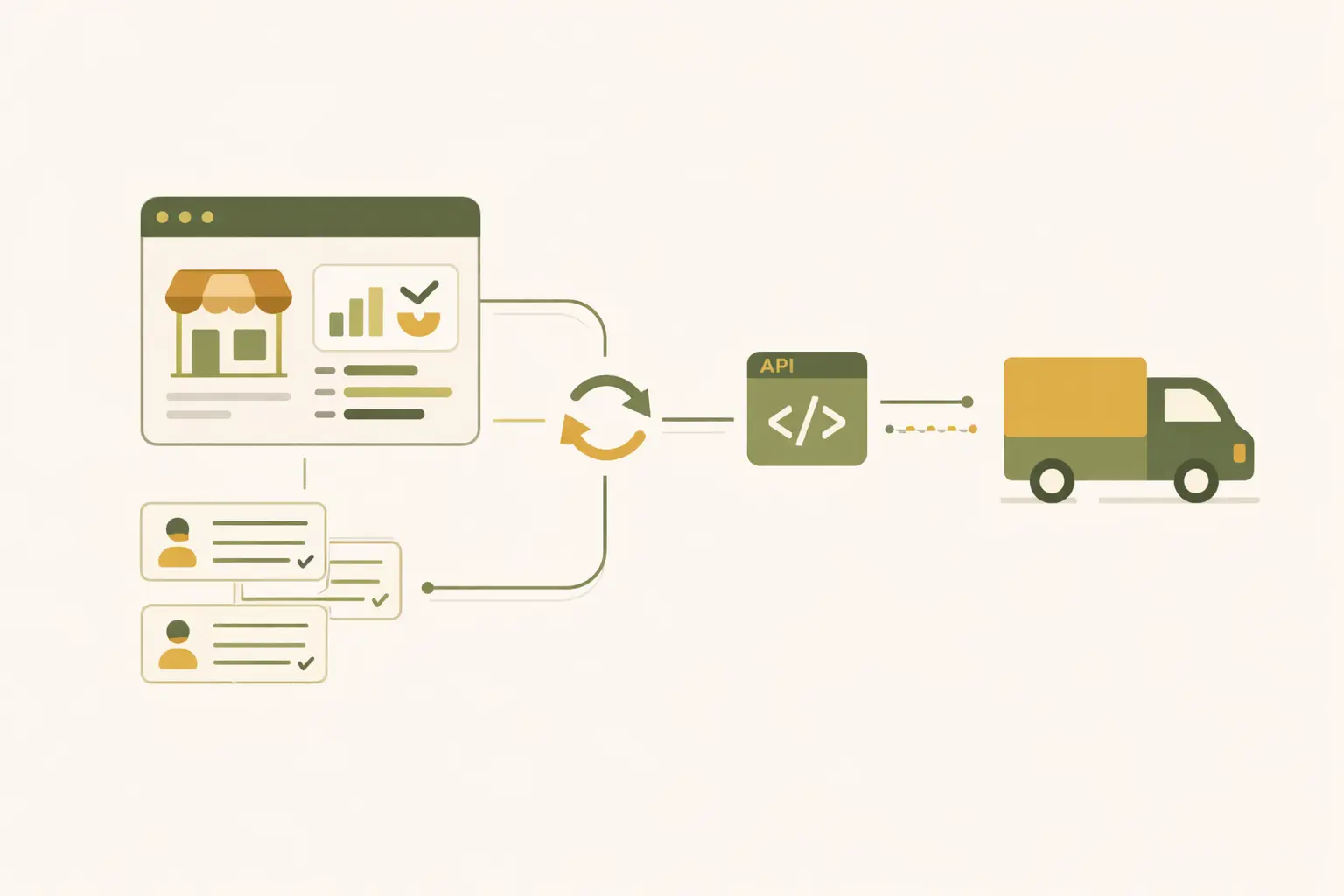
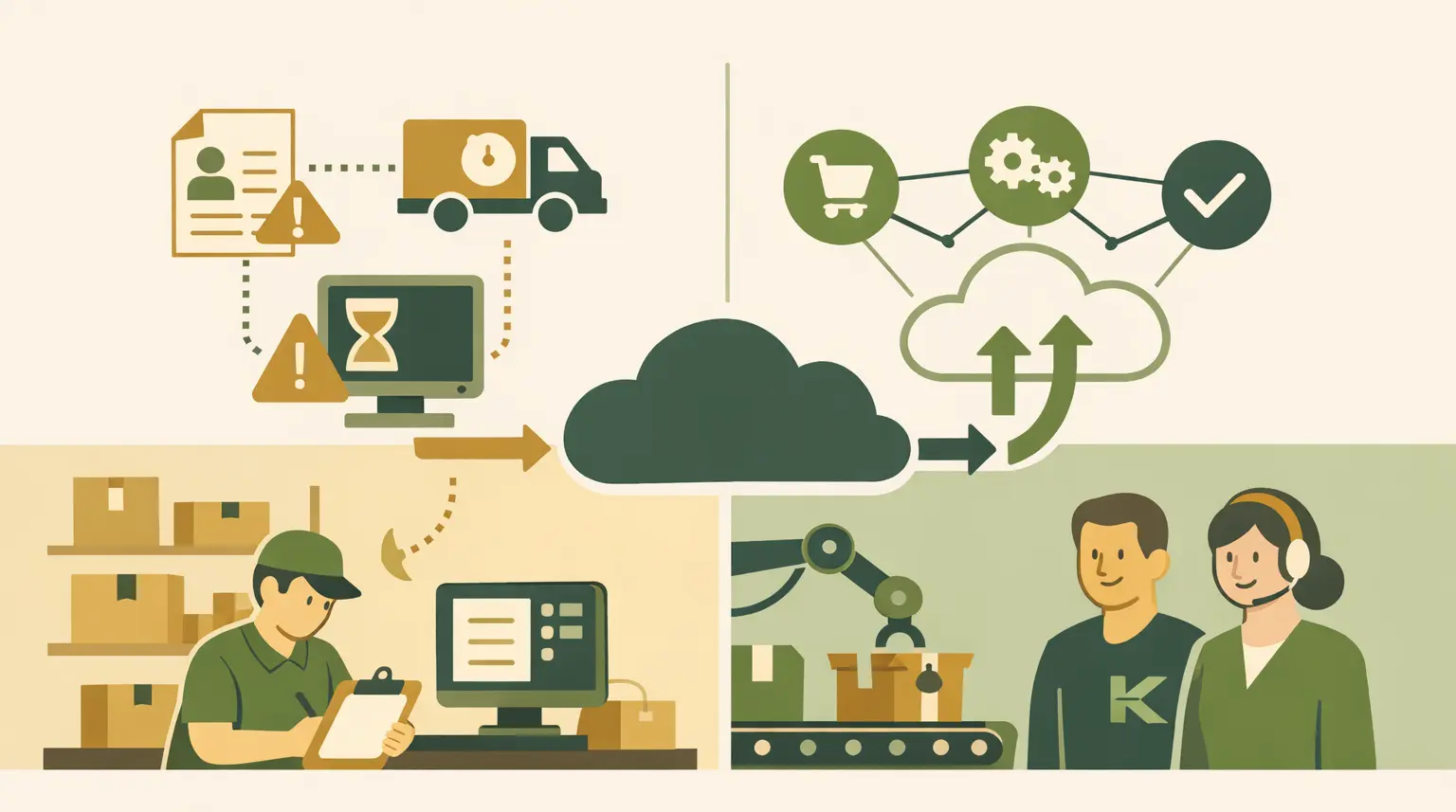
We set up a direct connection between your CRM (or website admin panel) and the API of the chosen fulfillment operator.
This means that when a customer places an order, all information (address, warehouse, weight) is automatically sent to the operator, who prepares the package. We also set up feedback for status tracking.
How to make your fulfillment competitive in the market
Imagine you entrusted your inventory storage and packing to a third-party company. The fulfillment operator receives your products, stores them in the warehouse, and when an order arrives — packs and ships it. The critical point becomes the transfer of order information.
When manually copying customer and order data into the operator’s system becomes a routine that takes hours, automation (via direct connection) becomes necessary.
At the moment when manual work starts slowing down delivery and increasing the risk of errors, investing in reliable integration through Kliox specialists becomes justified.
Ready to stop packing and start selling?
Optimizing logistics frees your time and money. Schedule a free consultation, and we will analyze your current order volume and help determine whether it’s time for warehouse outsourcing and which fulfillment operators in Ukraine are optimal for your niche.