

Launching an online store is not just about choosing products and creating a website. To ensure your business is stable, predictable, and legally compliant, it needs to be properly registered. Operating “legally” is the key to your peace of mind and customer trust.
Many entrepreneurs are intimidated by legal questions: how to register an online store, which FOP group for an online store to choose, which KVED for e-commerce to indicate? In this article, we will cover three key steps that every online business owner in Ukraine must follow.
Step 1: Registering as FOP. Which group to choose for an online store?
To legally accept payments and operate, you need to register as an Individual Entrepreneur (FOP). This can be easily done online via the “Diia” portal. The main point is to correctly choose the single tax group. 
For an online store, one of two groups is usually chosen:
2nd group of the single tax:
Income limit: ~6.67 million UAH per year (as of 2025).
Features: Can work with individuals and other single tax payers. Cannot work with legal entities on the general taxation system.
Who it suits: Ideal for most online stores selling goods to end consumers (B2C).
3rd group of the single tax:
Income limit: ~9.33 million UAH per year (as of 2025).
Features: Can work with everyone: individuals, FOPs, legal entities. Tax rate — 5% of income (or 3% + VAT).
Who it suits: If you plan to sell goods to other companies (B2B) or operate on a dropshipping model.
Step 2: Choosing KVEDs. Which codes are needed for online retail?
KVED (Classifier of Types of Economic Activity) is a special code that tells the state what exactly your business does. Choosing the correct KVEDs is mandatory. 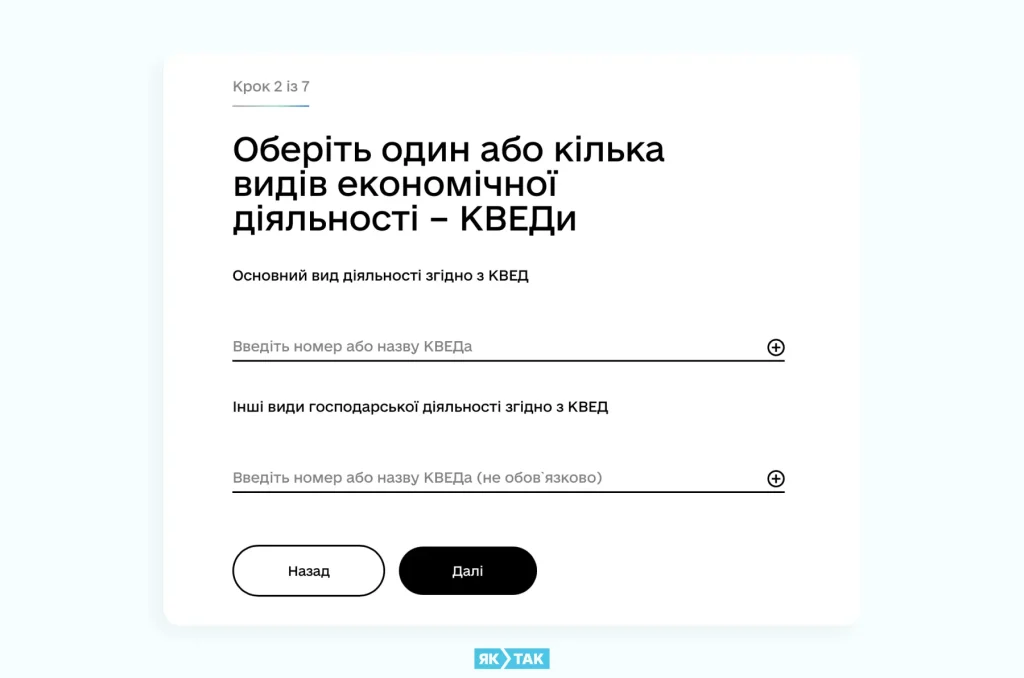
For an online store, the main code is KVED for e-commerce 47.91 — “Retail trade conducted by mail order firms or via the Internet”. It covers most online sales operations.
However, it’s worth adding a few additional KVEDs to protect yourself in the future:
- 46.19 “Agents in wholesale trade of a wide range of goods” (especially relevant for dropshipping).
- 63.12 “Web portals” (if the site will have a lot of informational content, forums).
- 73.11 “Advertising agencies” (if you plan to provide advertising services).
- 82.92 “Packaging” (if you offer gift-wrapping services).
Important! Only add KVEDs that correspond to your current and potential activities. This will help avoid issues with the tax authorities.
Step 3: RRO/PRRO. When is it mandatory for an online store and how does it work?
RRO (Cash Register) or its software analog PRRO is a device or program for fiscalizing (recording) sales. Since 2022, the use of PRRO for online stores is mandatory for most FOPs in groups 2-3 that accept online payments. 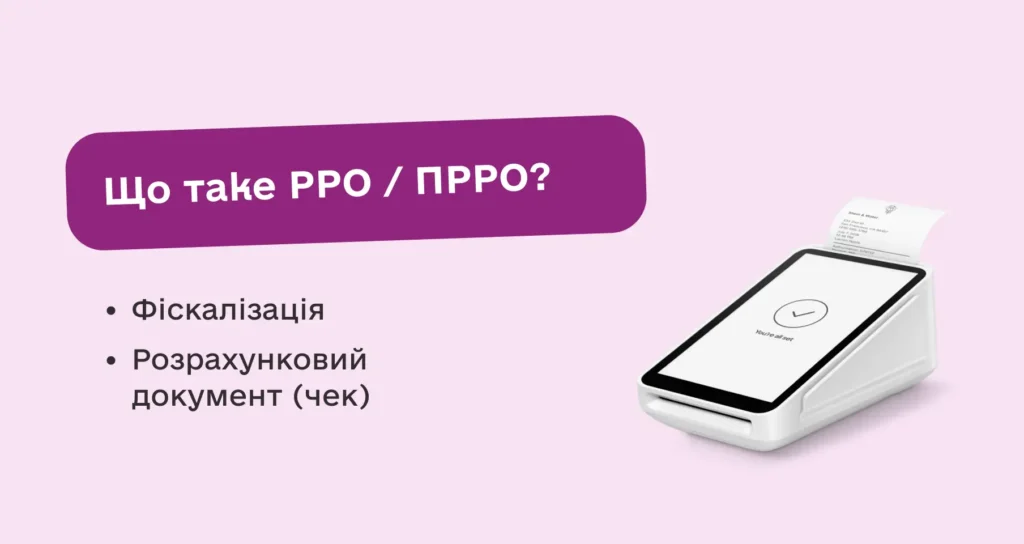
When do you definitely need PRRO?
Card payments on the site — if the client pays via LiqPay, Fondy, WayForPay, etc.
Payments to FOP card — if you provide the client with your business card number for payment.
Cash on delivery — if delivery is made via Nova Poshta or another carrier that acts as an intermediary and transfers money to your FOP account.
When PRRO might not be required?
The only exception — if you accept payments exclusively via IBAN to your FOP account (client makes a bank transfer). However, this method is inconvenient for most customers and may reduce conversion.
What is PRRO in simple terms?
It is a program (on a computer or smartphone) connected to the tax authority. With each payment, it records the sale and issues an electronic receipt, which you send to the customer.
Important: this article is not legal advice
We prepared this material based on our experience and current information to help you navigate the process. However, this article is for informational purposes only.
Tax legislation can change, and every business situation is unique. Before registering an online store, we strongly recommend consulting a professional accountant or lawyer to account for all the specifics of your business.
How we consider legal aspects in development
At Kliox, we understand that a website must not only function, but also comply with legal requirements. Therefore, during development we establish the necessary technical foundation.
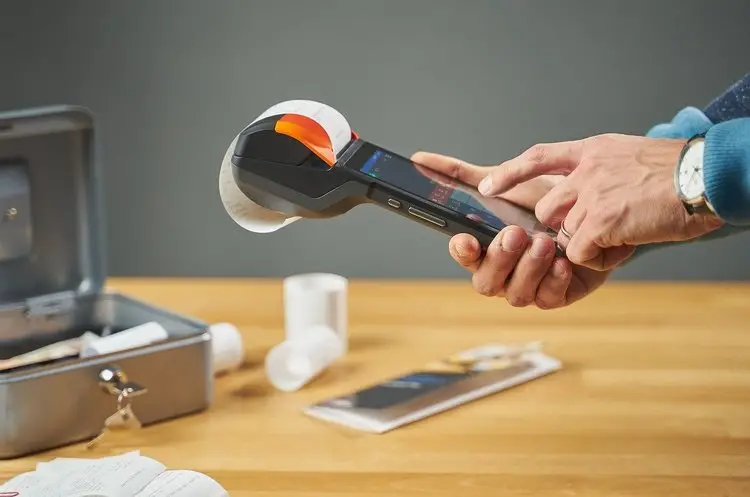
PRRO integration — we connect and configure your website to work with popular software cash register services (Checkbox, “Vchasno.Kasa”) so that receipt fiscalization happens automatically.
Public offer and Privacy Policy — we create the corresponding pages on the site and place links in the footer and on the checkout page, as required by the Consumer Protection Law.
Data security — we ensure the protection of your customers’ personal data using SSL certificates and secure protocols.
Conclusion. A correct legal start ensures peace of mind in the future
As you can see, to properly register an online store, you need to consider several important legal aspects. Choosing the correct FOP group for an online store, the appropriate KVEDs, and timely PRRO setup — these are not just formalities.
They form the foundation of your peace of mind and stable operations. Investing time in legal registration at the start will save you from much larger problems and fines in the future.
Need consultation for your project?
We understand that online store development is not just about technology, but about business as a whole.
If you plan to launch your e-commerce project, let’s discuss it together. We will help you not only with the technical part, but also share experience on business and organizational aspects.