The dream of owning an online store inspires many. It seems simple: find a product, create a website, launch ads, and earn profit. But the reality is much more complex. Without a clear plan, 9 out of 10 projects never become successful.
To help you avoid common mistakes, we at Kliox have prepared a comprehensive online store checklist. This is a step-by-step guide that will help you understand how to open an online store systematically and without unnecessary expenses. Go through each item, and your building an online store from scratch will become a predictable and manageable process.
Step 1: Foundation (Business and Legal Aspects)
Success begins not with the website, but with a well-thought-out business model. Before investing in development, answer these key questions. 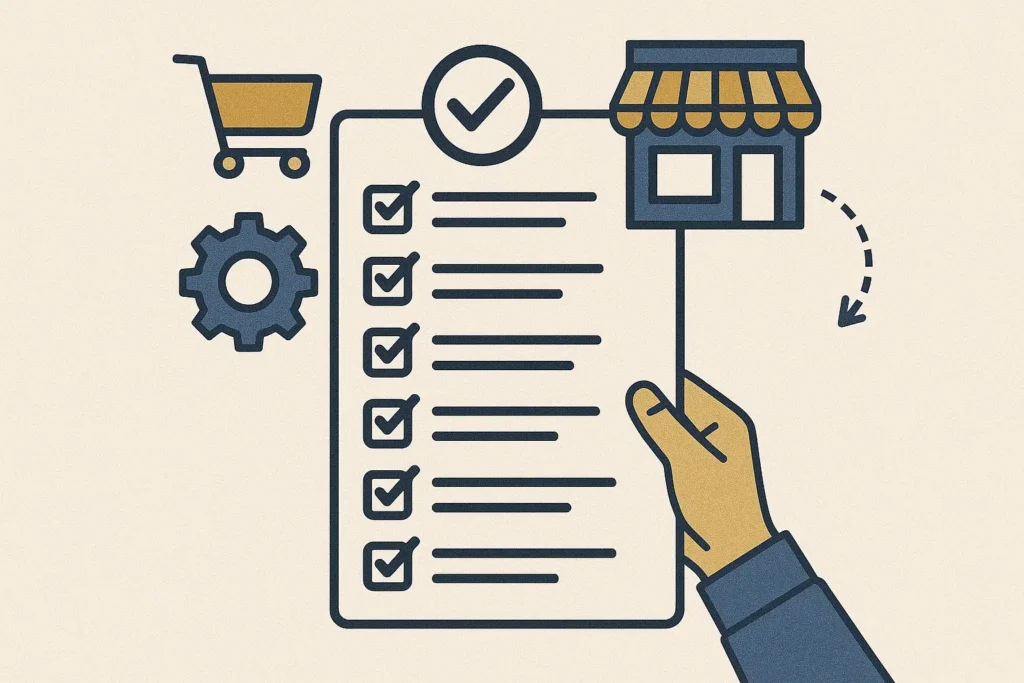
- Choosing a niche and market analysis Don’t try to sell everything at once. Start with a narrow niche you know well. Analyze demand and competitors to formulate your unique selling proposition (USP)—what makes you better: price, service, or product uniqueness.
- Finding suppliers Your profit directly depends on the terms you get. Discuss key points with potential partners: purchase prices, payment terms, shipping speed, and return policy. Consider different operating models: stock purchase, dropshipping, or in-house production.
- Registering a sole proprietorship and selecting KVED codes To operate legally and accept online payments, you need to register a business. The simplest option to start is registering a sole proprietorship (FOP) in the 2nd or 3rd group. Make sure you select the correct KVED codes for retail online trade, the main one being 47.91 “Retail trade conducted by mail order companies or via the Internet.”
Step 2: Technical Foundation
Once the business plan is ready, it’s time to lay the technical foundation. The right choice at this stage will save you money and stress later. 
- Choosing a website platform This is a strategic decision. Main options:
- SaaS platforms (e.g., Shopify): Fast launch and reliability. Cons — monthly subscription and functional limitations.
- CMS (e.g., WordPress): Full control and flexibility. Cons — requires more development time and quality support.
- Custom development: Unlimited possibilities. Cons — high cost and long timelines.
The correct platform choice depends on your budget, goals, and scaling plans.
- Domain registration and hosting selection Domain — this is your website name. Choose a short and memorable name that associates with your brand. Hosting — the server where the site is hosted. When choosing hosting, pay attention to:
- Disk type: Choose SSD, not HDD — it will significantly speed up the site.
- Server location: For a Ukrainian audience, servers in Ukraine or Europe are preferable.
- Technical support: Ensure it operates 24/7 and responds quickly.
Step 3: Content and Design
Visitors evaluate your website in seconds. Quality content and thoughtful design are what turn a casual visitor into a buyer. 
- Preparing photos and videos Professional photos are your main sales tool. Take care of:
- Quality: Images should be clear and well-lit.
- Angles: Show the product from all sides, in detail, and in use context.
- Video: Short video reviews can increase conversion by up to 80%.
- Writing product descriptions Texts should not just list features but sell. Good description:
- Answers customer questions: How will this product solve their problem?
- Highlights benefits: What does the customer gain by choosing this product?
- SEO-optimized: Contains keywords for better Google ranking.
- Structuring and UX design Website usability (UX) directly affects sales. Make sure that:
- Navigation is intuitive: Customers can find any product in 2–3 clicks.
- Ordering process is simple: Minimal fields and the option to purchase without registration.
- Site is responsive: Looks and works perfectly on mobile devices.
Step 4: Marketing Launch
Creating a website is only the beginning. To get your first sales, you need to attract your target audience. 
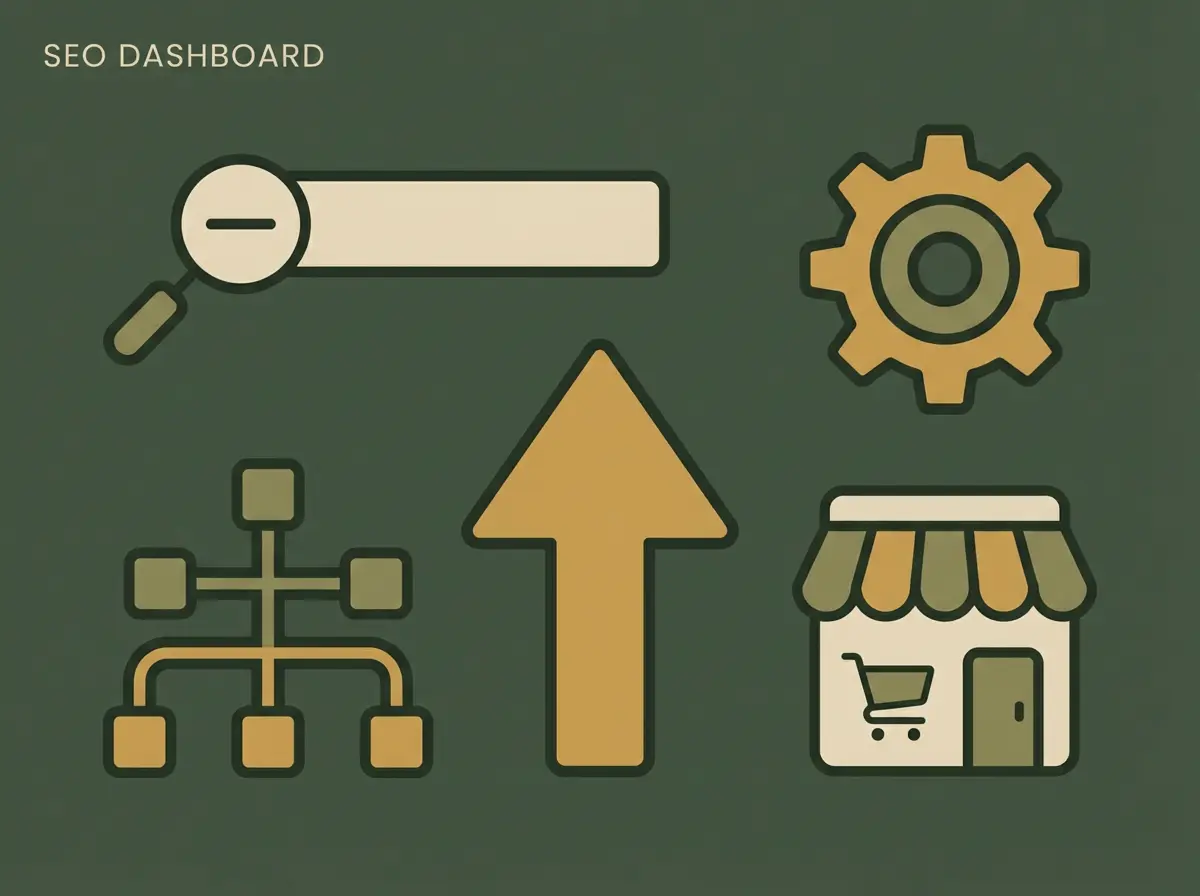
- Basic SEO optimization For search engines to “love” your store, basic settings must be done before launch:
- Compile a keyword list: List of keywords your audience will search for.
- Set meta tags: Unique Title and Description for the homepage and category pages.
- Configure technical files: Create robots.txt and sitemap.xml.
- Creating and setting up social media Create business pages on Instagram and Facebook. Design them in a style consistent with the website, add links to the store, and prepare a marketing publication plan for the first month.
- Planning the first ad campaign Determine which channel will bring the fastest results for your niche. Most often for e-commerce, these are:
- Google Shopping: Product ads for “hot” customers.
- Targeted advertising on Instagram/Facebook: For visual product presentation. Allocate a test budget to check hypotheses and analyze customer acquisition costs.
How we do it at Kliox: from idea to profitable business
Launching an online store independently is a complex process requiring time and expertise in dozens of areas: from registering a sole proprietorship to SEO optimization. Any mistake at one stage can lead to lost money and frustration.
So you can focus on growing your business rather than technical issues, we offer a turnkey online store development service.
Our “Fast Start” package is designed specifically to cover all items on this checklist. We handle all the complex work: from choosing the optimal platform to basic marketing setup to achieve the first sales.
Conclusion: launch is just the beginning
As you can see, launching an online store in 2025 is not just “making a website.” It is a comprehensive process requiring a strategic approach at every stage. Use this online store checklist as a roadmap to ensure nothing is missed.
Remember, a successful launch is only the first step. Next comes continuous work on attracting customers, improving service, and analyzing results.
Ready to turn your idea into a real business?
Let’s discuss your project. We will analyze your niche for free, answer all your questions, and offer a personalized launch plan for your online store.